Automatic Vertical Insulating Glass Production Line
Share to:
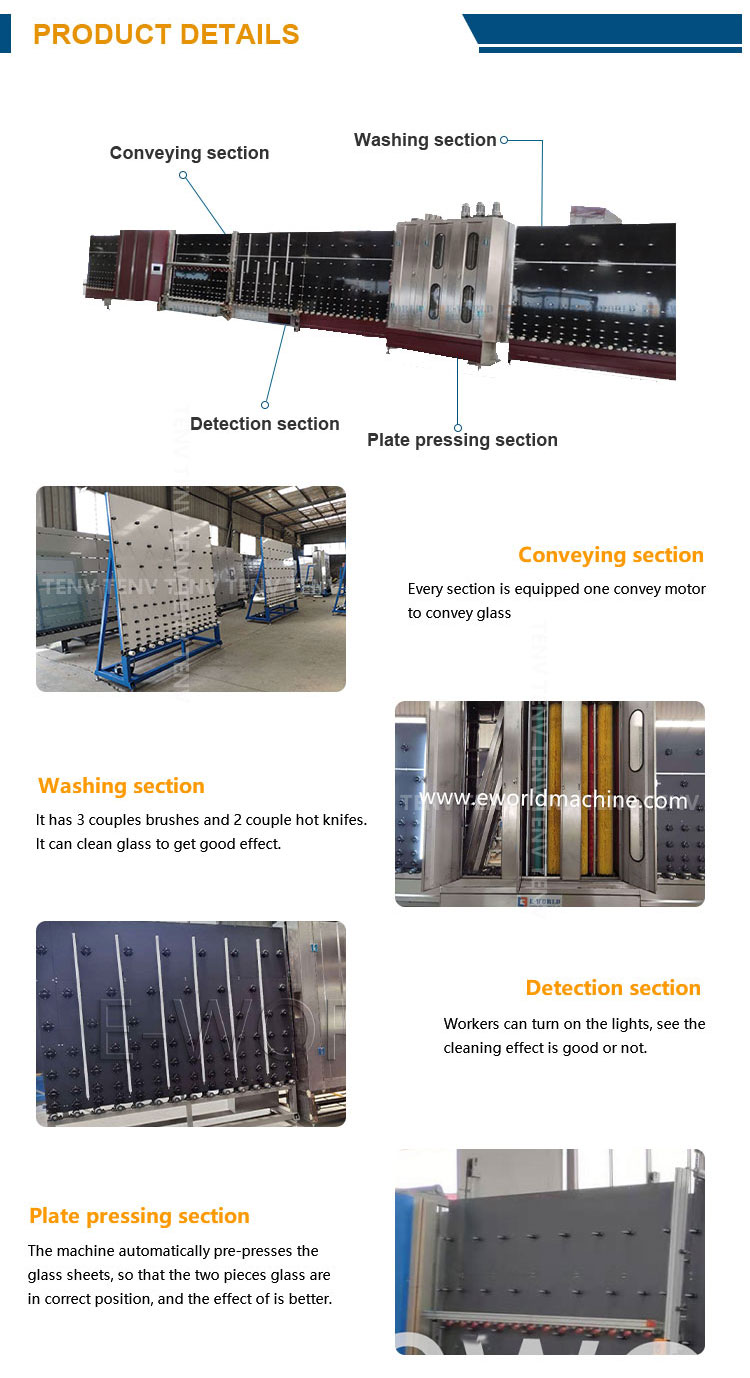
Our automatic vertical insulating glass production line handles glass conveying, washing, drying, inspection, pane assembly and pressing for double- and triple-glazed insulating glass units (IGUs). The line is designed for aluminum spacer frames and includes Low-E coating detection.
We can review equal-size and unequal-size panes, stepped units and shaped glass against your drawings. Share your pane sizes, glass thicknesses, spacer widths and target output so we can confirm the assembly configuration and the equipment needed for your production process.
Upright conveyor sections transfer panes between the processing stations. Machined cast components and expansion couplings help align the conveying sections. The line detects the coated face of Low-E glass as the pane enters the process.
Stainless Steel Washing and Heated-Air Drying
The stainless steel washer uses three pairs of brushes, with automatic control for all six brushes. A tempered-glass inspection door and a door signal switch provide access and monitoring. The water spray nozzles can be accessed for servicing.
The washing section supports intermittent operation. The original configuration also describes temperature-triggered heating for the wash water and drying air.
Illuminated Inspection Before Spacer Placement
The inspection station uses lighting to help operators check the glass surface after washing and drying. Inspect the pane before applying the spacer frame and sending the glass to assembly.
Pane Alignment, Pressing and Triple-Glazing Controls
The pressing section brings the panes together around the spacer frame. PLC and touchscreen controls support automatic and manual operation, fault diagnostics and a dedicated triple-glazing sequence. The control logic can hold the sequence while it waits for the next pane.
Share the pane dimensions and offsets for stepped or shaped units. We can review the assembly method, pane alignment and pressing requirements against your drawings.
Vertical Insulating Glass Line Specifications
Use the published figures below as a reference when reviewing your glass sizes, plant utilities and production targets. We confirm the specification against the model and configuration in your quotation.
Glass Size, Thickness and Processing Speed
Parameter
Published Reference
Maximum glass size
2000 × 2500 mm
Minimum glass size
300 × 500 mm
Single-pane thickness
3–12 mm in the technical table. Confirm the range for the quoted model.
Maximum finished IGU thickness
50 mm
Washing speed
0–8 m/min
Conveying speed
45 m/min
Reference cycle time
30–40 seconds for a 900 × 1200 mm unit
Washing brushes
3 pairs
Published brush diameter entries
0.1 mm for rough brushes and 0.06 mm for fine brushes. Confirm the measurement refers to the bristles.
Line Dimensions and Workshop Utilities
Parameter
Published Reference
Overall dimensions (L × W × H)
20,000 × 2,500 × 3,600 mm
Water use
0.5 tonne/day
Published air exhaust volume
0.8 m³/min. Confirm the basis of this figure and the required air supply.
Air pressure
1.0 MPa
Electrical supply
Technical table lists three-phase 380 V / 50 Hz or 220 V / 60 Hz. Confirm the selected supply.
Power
10 kW in the overview. Confirm the connected load, including heaters and any auxiliary equipment.
Matching Equipment for Spacer Preparation, Gas Filling and Sealing
Aluminum Spacer Bending, Desiccant Filling and Butyl Application
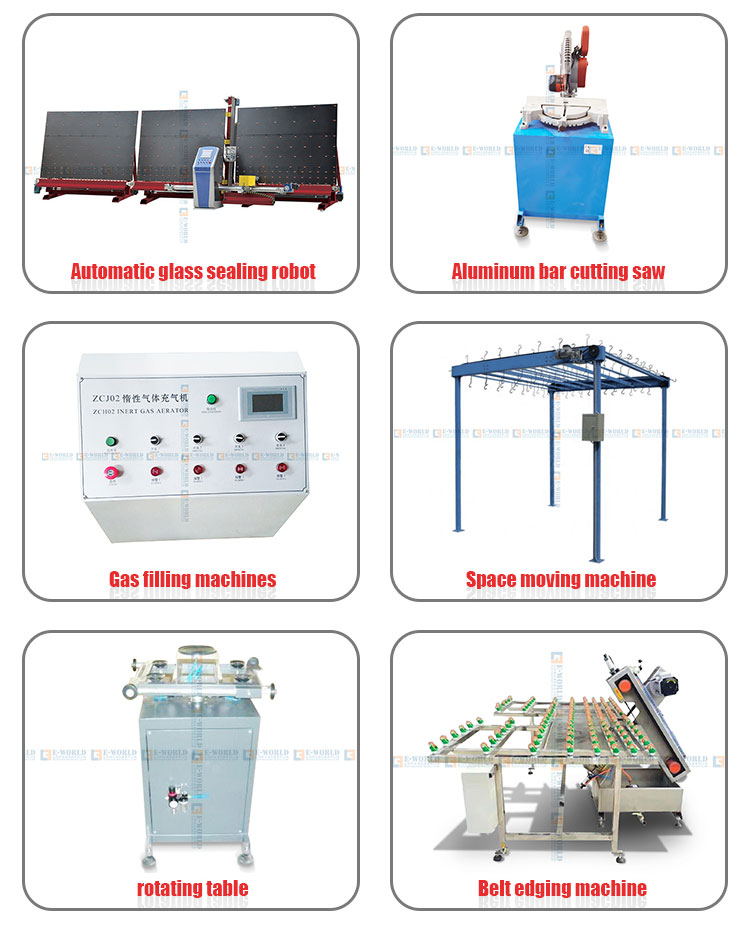
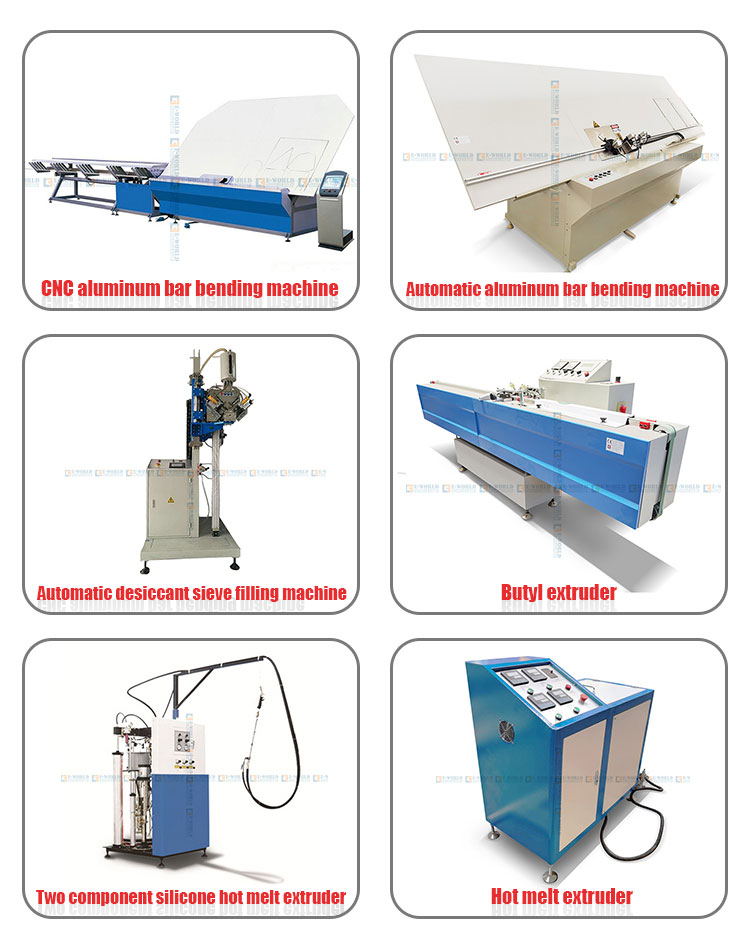
Select a CNC or automatic spacer bending machine based on your frame sizes, spacer profiles and production volume. A desiccant filling machine fills the aluminum spacer, and a butyl extruder applies the primary seal to the spacer frame before assembly. An aluminum bar cutting saw can be specified for spacer preparation workflows that require cut lengths.
Argon Filling, Secondary Sealing and Glass Handling
Where the unit specification calls for argon, we can review a separate gas filling machine and confirm how it fits into the assembly and sealing sequence. For the secondary seal, compare a two-component sealant extruder, a hot-melt extruder or an automatic sealing robot against the specified sealant and your production target.
The original equipment selection also shows a spacer transfer frame, a rotating table and a belt edger. Confirm which machines are needed for your layout and which are included in the quotation.
IGU Line Delivery, Installation and FAQs
Export Packaging and Shipment From Qingdao
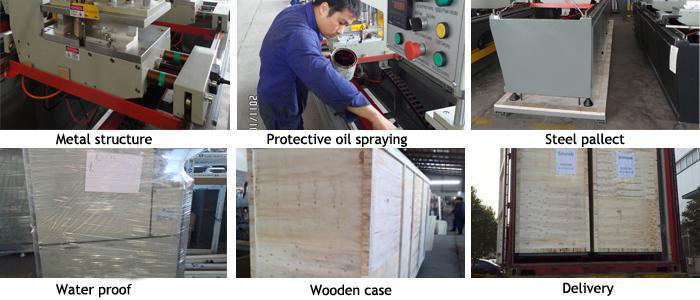
We list seaworthy wooden cases and Qingdao as the port of shipment. Before dispatch, confirm the number of packages, shipping dimensions, unloading requirements and the installation sequence for the line sections.
Commissioning, Operator Training and Spare Parts
We can discuss engineer-assisted installation, machine adjustment and operator training. We also list English manuals, video tutorials, remote and telephone support, spare parts, and post-warranty maintenance and repair. Confirm the training location, on-site responsibilities, warranty coverage and consumable supply with your quotation.
What Types of Insulating Glass Units Can the Line Process?
The line is described for double- and triple-glazed units with aluminum spacer frames. Send us drawings for equal-size panes, unequal-size panes, stepped units or shaped units so we can confirm how each design can be assembled and pressed.
Can the Line Process Low-E Glass?
The line includes Low-E coating detection. Provide the coating type and required face orientation so we can review the detection and brush settings for your glass.
What Glass Sizes and Cycle Times Are Listed?
The published size range is 300 × 500 mm to 2000 × 2500 mm. The stated cycle time is 30–40 seconds for a 900 × 1200 mm unit. Share your typical pane sizes, glazing mix and target output so we can review the cycle for your production conditions.
Are Argon Filling and Secondary Sealing Included?
The product page lists gas filling and secondary sealing equipment separately. Tell us which gas, sealant and application method your IGU specification requires. We can itemize the machines and show how they connect to the quoted line.
How Do I Confirm Lead Time, Payment and Warranty?
Send your order quantity, destination and required installation date. We will confirm the delivery schedule, payment terms, warranty period, covered components and service arrangements in the quotation.