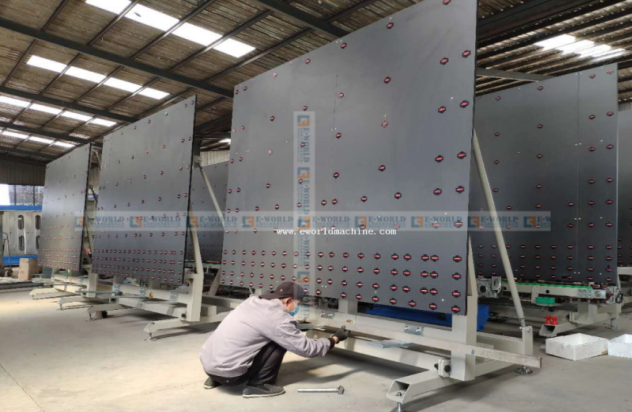
Glass processing has become far more sophisticated than simply cutting sheets into smaller sizes. Today, manufacturers must deliver precision, consistency, speed, safety, and high visual quality across a wide range of end uses, from architectural glass and shower doors to furniture glass, automotive components, and energy-efficient insulating units. That is why choosing the right Glass Machinery is no longer just a purchasing decision; it is a production strategy. Every processing stage depends on equipment that can maintain accuracy, reduce breakage, control labor costs, and support a reliable workflow from raw sheet handling to final packaging. For companies entering the glass industry, expanding capacity, or upgrading older equipment, understanding the role of each machine in the production chain is essential. This guide explains the key types of Glass Machinery used at every major stage of processing and shows how they work together to build an efficient, modern glass workshop.
Why Glass Machinery Matters Across the Entire Production Line
A glass product is only as good as the process behind it. Even high-quality raw glass can turn into waste if cutting is inaccurate, edge finishing is inconsistent, washing leaves contamination, or tempering introduces stress problems. In contrast, when the right Glass Machinery is matched to the right production needs, the benefits multiply throughout the factory.
Well-selected equipment improves dimensional accuracy, lowers material waste, reduces rework, and supports a smoother flow between stations. It also helps manufacturers respond to changing market demands. For example, a company focusing on building glass may need larger cutting tables and tempering capacity, while a workshop producing decorative glass may place more emphasis on edging, beveling, and drilling flexibility.
Stage 1: Glass Loading, Storage, and Initial Handling
Before glass is cut or processed, it must be moved safely. This first stage is often underestimated, but efficient handling equipment is crucial for productivity and safety.
Large glass sheets are heavy, fragile, and difficult to position manually. Loading tables, glass racks, lifting arms, and automatic loading systems help operators transfer sheets from storage to the cutting station with less physical effort and lower breakage risk. In larger factories, intelligent loading systems can also improve speed and alignment, especially when handling high volumes.
At this stage, common Glass Machinery may include:
· Glass loading tables
· Air flotation tables
· Tilting and lifting devices
· Storage racks and transfer systems
The goal is simple: keep raw sheets moving smoothly while reducing scratches, chips, and handling damage before processing even begins.
Stage 2: Cutting Equipment for Size and Shape Accuracy
Cutting is one of the most critical stages in glass manufacturing. A small dimensional error at this point can affect all later operations, especially when the glass will be tempered, laminated, insulated, or assembled into framed systems.
Manual and semi-automatic cutting solutions
Smaller workshops may begin with manual or semi-automatic cutting tables. These are suitable for simpler production needs, shorter runs, or custom work. They offer flexibility and lower initial investment, though productivity depends more heavily on operator skill.
CNC and automatic glass cutting machines
For higher-volume or precision-driven production, automatic glass cutting machines are the preferred option. These systems can optimize cutting layouts, reduce waste, and ensure repeatable results across many sheets. In advanced applications, CNC cutting equipment can also handle complex shapes, notches, and special design requirements.
A good Glass Cutting Machine should deliver clean score lines, stable movement, reliable software support, and efficient material optimization. In modern factories, cutting quality is one of the strongest indicators of how well the rest of the line will perform.
Stage 3: Edge Processing, Grinding, and Drilling
Once glass is cut, the edges usually require further treatment. This stage improves both safety and final product quality. Depending on the application, edge processing may be simple or highly decorative.
Straight-line edging machines are widely used for flat glass products that require clean, polished, or beveled edges. These machines are common in the production of windows, doors, partitions, shelves, tabletops, and mirrors. For more specialized work, shape edging machines allow processors to finish curved or irregular pieces.
Drilling machines are also essential when glass panels require hardware holes, hinges, handles, or installation points. In shower glass, furniture glass, and architectural fittings, drilling precision is especially important because improper hole positioning can lead to fitting problems or stress concentration during tempering.
This stage may involve several types of Glass Machinery:
Processing Task | Main Equipment | Typical Purpose |
Straight edge finishing | Straight-line edging machine | Smooth, polish, or bevel flat edges |
Shape edge finishing | Shape edging machine | Process curved or irregular glass |
Hole making | Glass drilling machine | Create precise mounting or hardware holes |
Slotting and milling | Glass milling machine | Prepare cutouts and special features |
In a practical production environment, the choice of edge processing equipment often depends on whether the factory prioritizes volume, decorative quality, or product diversity.

Stage 4: Washing and Drying Before Further Processing
Glass that looks clean is not always process-ready. Dust, oil, grinding residue, fingerprints, or water marks can affect coating adhesion, lamination quality, insulating glass sealing, and overall visual appearance. That is why washing and drying machines are an essential part of professional Glass Machinery lines.
A glass washing machine typically uses brushes, clean water, and air knives or drying systems to remove contamination after cutting, edging, or drilling. In some factories, washing takes place more than once, especially before tempering, laminating, or insulating glass assembly.
Why this stage is so important
If glass enters a tempering furnace with residue on the surface, defects may become more visible after heating. If laminated glass is assembled with contamination between layers, the finished result can show bubbles or optical issues. If insulating glass is assembled without proper washing and drying, long-term sealing performance may be affected.
For this reason, the washing stage is not just about appearance. It directly supports downstream quality control.
Stage 5: Tempering and Heat Treatment Systems
Tempered glass is one of the most important categories in modern glass processing. It is widely used in building facades, doors, shower enclosures, railings, partitions, appliances, and many safety-related applications. Producing it requires specialized Glass Machinery designed for controlled heating and rapid cooling.
A tempering furnace heats the glass to a high temperature and then cools it rapidly to create a stress pattern that improves strength and changes breakage behavior. The process must be carefully controlled. Uneven heating, poor conveyor stability, or inconsistent quenching can lead to warping, optical distortion, or breakage.
Different tempering systems may be selected based on glass thickness range, production capacity, and product focus. Some factories prioritize high output for standard architectural glass, while others need flexibility for thinner or more customized pieces.
Important evaluation points for tempering equipment include:
· Temperature control stability
· Energy efficiency
· Roller system quality
· Flatness and optical performance
· Production throughput
· Ease of operation and maintenance
For many processors, the tempering furnace is one of the largest and most strategic investments in the whole factory.
Conclusion
A complete glass processing operation depends on more than one star machine. It relies on a chain of well-matched equipment, from loading and cutting to edging, washing, tempering, laminating, and insulating glass assembly. Each stage plays a direct role in final product quality, production speed, material efficiency, and customer satisfaction. That is why a practical Glass Machinery guide should not only explain what each machine does, but also show how every stage connects to the next. For companies planning a new workshop or upgrading an existing line, the most valuable approach is to choose equipment that fits real production needs, supports quality consistency, and leaves room for growth as the market evolves.
From our perspective, the best investment in Glass Machinery is one that improves the whole process rather than solving only one isolated step. We believe manufacturers should evaluate equipment based on workflow compatibility, reliability, ease of operation, and long-term support, not only on headline specifications. At Shandong Eworld Machine Co.,Ltd, we focus on helping customers understand which machines are suitable for their products, capacity goals, and factory conditions. If you want to learn more about practical glass processing solutions, suitable line configurations, or equipment options for different production stages, you can contact Shandong Eworld Machine Co.,Ltd for further information.
FAQ
1. What is the most important machine in a glass processing factory?
There is no single answer, because the most important machine depends on the product type. However, cutting, edge processing, washing, and tempering equipment are often the core of many flat glass operations.
2. Can a small workshop start with only basic Glass Machinery?
Yes. Many businesses begin with cutting, edging, drilling, and washing equipment, then expand into tempering, laminating, or insulating glass as order volume and product range grow.
3. Why is a glass washing machine necessary if the glass already looks clean?
Because invisible dust, oil, and residue can affect tempering quality, lamination bonding, sealing performance, and final visual appearance. Clean-looking glass is not always process-ready glass.
4. How do I choose between separate machines and a more integrated line?
If your production volume is stable and higher, integrated lines often improve consistency and efficiency. If your business focuses on flexible custom work or limited output, separate machines may offer more practical control at the beginning.