For procurement teams, industrial designers, and product engineers, selecting the right manufacturing method is a critical path to market. You must navigate complex material sciences to ensure long-term product viability. Misaligning your product specifications and the chosen manufacturing process leads to immediate structural failures. It can also cause severe budget overruns from wasted tooling and scrapped production runs. Worse, incorrect choices often result in costly compliance rejections down the line.
This guide breaks down the core Glass Forming Processes—float, container, and specialty. We evaluate their engineering realities, scalability limitations, and ideal use-case alignment. You can use these insights to quickly shortlist the right production approach. Understanding these technical nuances prevents expensive redesigns and ensures your next product launches successfully.
Key Takeaways
Float Glass delivers unmatched surface flatness and scalability for large-format architectural, automotive, and solar applications, but requires high minimum order volumes.
Container Glass utilizes blow-and-blow or press-and-blow techniques optimized for high-speed, high-volume packaging where chemical durability and wall-thickness control are paramount.
Specialty Glass (including fusion draw and precision molding) achieves micron-level tolerances and extreme thermal resistance necessary for consumer electronics, optics, and pharma, though at a premium production cost.
Partner Selection hinges not just on the primary forming capability, but on verifiable ISO compliance, defect-rate management, and secondary processing capacity (coating, tempering).
Table of Contents
Toggle
The Business Impact of Glass Forming Processes
Initial tooling investments heavily dictate the economic viability of your project. High-precision methods require expensive, hardened steel molds. They demand longer setup times and extensive calibration. You must amortize these upfront costs over large production runs to maintain profitability. Choosing a cheaper forming method might seem attractive initially. However, cheaper methods often sacrifice micron-level accuracy. You might face severe assembly issues later when components fail to align. We see teams struggle constantly when they ignore these initial trade-offs. You need to weigh setup times against your target unit costs before committing to a specific methodology.
Different manufacturing methods carry inherent physical limitations. Thermal shock is a constant threat during the cooling phases. If a factory mismanages the annealing lehr, your products will inevitably shatter. Inclusion defects also drastically reduce your final yield. Bubbles, striae, or unmelted particles render optical products entirely useless. You pay for the wasted raw material and the lost machine time. A reliable manufacturing partner actively tracks and minimizes these defects. They utilize automated optical inspection tools to maintain strict consistency across batches.
Rigorous process control determines your ability to meet industry standards. Traceability is non-negotiable in highly regulated sectors today. Automotive safety glazing requires strictly documented impact resistance testing. Pharmaceutical Glass must meet uncompromising USP requirements to prevent drug interaction. You cannot rely on visual inspections alone. You need documented proof of material composition. You also need exhaustive records of all thermal treatments applied.
Here are typical steps to ensure compliance in your supply chain:
Define exact material specifications and tolerances before requesting any vendor quotes.
Audit the manufacturer's internal quality control procedures and calibration schedules.
Request comprehensive documentation of their raw material sourcing and batch testing.
Verify their specific testing protocols for thermal shock, chemical durability, and impact resistance.
Establish clear, contractual guidelines for lot traceability and product recall management.
Float Glass Process: Mastering Scale and Surface Flatness
The continuous ribbon method defines this widespread approach. Factories pour molten material continuously onto a shallow, carefully controlled bath of molten tin. The material floats gently on the liquid tin surface. It spreads out naturally and forms a perfectly flat, uniform layer. Gravity and surface tension work together simultaneously here. They create parallel, distortion-free surfaces on both sides. You do not need to mechanically polish the final product, saving immense secondary costs. The ribbon slowly cools as automated rollers pull it directly into a long annealing lehr.
We must evaluate the operational criteria and expected outcomes for this method. Scalability represents the biggest advantage here. The primary furnace operates continuously without interruption. Factories run these massive production lines 24/7 for several years at a time. Shutting down a furnace causes severe refractory damage. Therefore, high-volume, uninterrupted production remains mandatory. Cost-efficiency scales perfectly with this volume. You achieve the absolute lowest cost per square meter this way. Bulk buyers benefit immensely from this continuous, high-speed output.
Feature constraints remain quite rigid. You are limited strictly to completely flat geometries. The speed of the drawing rollers strictly controls all thickness variations. A faster draw speed yields a much thinner sheet. You cannot create complex shapes, curves, or varying thicknesses during this primary step.
Implementation risks center almost entirely around volume requirements. This specific method proves highly prohibitive for low-volume custom runs. You cannot simply order a few hundred square meters of a custom chemical composition. The continuous furnace operation requires massive, multi-ton minimum orders. You must commit to significant warehouse inventory if you need a unique tint or customized thickness.
Best fits naturally include large-format applications. Architectural glazing relies entirely on this method for building facades. Automotive windshields start as flat sheets here before undergoing secondary bending processes. Solar panel substrates also depend heavily on this cost-effective, perfectly flat foundation.
Container Glass Forming: Blow-and-Blow vs. Press-and-Blow
This process begins with highly precise gobs of molten material. Mechanical shears cut the continuous stream into exact, predefined weights. The hot gobs drop rapidly into metal blank molds. From here, two primary shaping techniques take over to create the final cavity. The blow-and-blow method uses high-pressure compressed air. It forces the gob down against the blank mold to form an initial parison. The parison transfers quickly to a final blow mold. More compressed air pushes the material outward to its final shape. The press-and-blow method substitutes the initial air blast with a mechanical metal plunger. The plunger physically presses the gob into the blank mold.
Evaluation criteria reveal distinct advantages for each unique technique. Wall thickness control heavily dictates your choice here. Press-and-blow offers vastly superior material distribution. It creates highly uniform walls for wide-mouth jars and containers. You avoid dangerous thin spots in the base or along the shoulders. Blow-and-blow suits narrow-neck bottles much better. Mechanical plungers cannot easily retract from narrow, restrictive openings without causing damage.
Throughput remains incredibly high across both variations. Automated Individual Section (IS) machines handle the entire workload. They provide rapid, reliable scalability for millions of identical units. A single IS machine can comfortably process hundreds of individual gobs per minute. Material grades integrate seamlessly into these lines. Factories use standard Type I, II, and III formulations. These specific grades guarantee necessary chemical inertness. They protect food, beverages, and sensitive pharmaceutical medications from dangerous contamination.
Implementation risks require careful upfront engineering. You face high initial tooling costs for any custom mold design. Complex curves or intricate embossing require expensive multi-part molds. Managing thermal gradients also proves challenging during production. You must prevent invisible stress fractures during the cooling phase. An improper annealing curve leaves dangerous residual stress trapped in the walls. The product might spontaneously break during transport or high-speed filling operations.
Food and beverage packaging heavily relies on these automated techniques. Pharmaceutical vials utilize the chemical durability of these specific formulations. Cosmetics containers benefit from the structural integrity and premium, heavy feel they provide.
Specialty Glass Forming: Precision, Tubing, and Advanced Molding
Niche forming techniques dominate this highly technical sector. They handle extreme dimensional tolerances and highly specialized chemical compositions. The Fusion Draw process creates the ultra-thin screens used in modern displays. Molten material flows down both exterior sides of a V-shaped trough. The two separate streams meet exactly at the bottom and fuse seamlessly. They pull downward into a continuous, microscopic sheet. The Vello and Danner processes create precision hollow tubing. They draw molten material constantly over a hollow, air-fed mandrel. Precision Glass Forming Processes shape complex optical lenses directly. This involves ultra-high temperatures and exceptionally polished, oxygen-free molds.
Micron-level tolerances are absolutely essential here. Optical clarity demands perfect, mathematically precise surface geometry. Electronic integration requires completely flat, warp-free substrates. You simply cannot achieve this precision with standard commercial forming methods. Material flexibility distinctly sets these methods apart. They easily handle complex, highly engineered compositions. Aluminosilicate and borosilicate offer extreme thermal shock resistance. They survive rapid, violent temperature changes without fracturing.
Surface quality reaches its absolute peak in the Fusion Draw process. The material creates pristine surfaces entirely untouched by solid forming tools. You eliminate the need for expensive, time-consuming post-polishing. The surface emerges virtually flawless right off the automated draw line.
Lower production speeds are a harsh reality. You cannot rush micron-level precision without inducing errors. Significantly higher energy consumption also impacts the final budget. Specialized furnaces must maintain extreme heat to melt these advanced compositions. Stringent quality control thresholds naturally lead to much lower overall yields. Even microscopic inclusions cause immediate batch rejection. These operational factors combine directly to create a substantial premium production cost.
Smartphone cover screens require specialized, chemically strengthened aluminosilicate. Semiconductor manufacturing substrates demand perfect flatness for lithography. Precision optical lenses rely entirely on advanced, isothermal molding. Laboratory apparatus utilizes complex borosilicate tubing for unmatched chemical resistance.
Below is an overview comparing typical tolerances and volume requirements across the main techniques to aid your selection process.
Process Type
Typical Tolerance Level
Relative Tooling Investment
Ideal Production Volume
Float Process
± 0.2mm (Thickness)
Very High (Furnace)
Extremely High (Continuous)
Press-and-Blow
± 0.5mm to 1.5mm
Moderate
Medium to High
Fusion Draw
Sub-micron Level
High
Medium to High
Precision Molding
± 1 to 5 microns
High
Low to Medium
How to Evaluate and Shortlist a Glass Manufacturing Partner
Process alignment represents your very first priority. You must match your required tolerances, projected volume, and part geometry strictly to the manufacturer’s primary capabilities. Do not ask a container factory to produce precision optical lenses. Their heavy industrial equipment cannot hold the necessary microscopic tolerances. Evaluate their core competencies rigorously before ever sending an RFQ.
Secondary processing adds massive value to your supply chain. Assess their actual in-house capacity for necessary post-forming steps. Chemical strengthening vastly improves final impact resistance. AR/AF (Anti-Reflective/Anti-Fingerprint) coatings significantly enhance the end-user experience. Edge grinding prevents microscopic crack propagation. Thermal tempering introduces beneficial compressive stress for safety applications. A partner with deep in-house capabilities reduces your overall supply chain complexity. You avoid shipping fragile, unfinished parts between multiple third-party vendors.
Quality assurance and physical auditing remain strictly non-negotiable. You must verify their specific internal testing protocols. Ask exactly how they measure internal stress birefringence. This test reveals hidden structural weak points. Check their dimensional accuracy procedures thoroughly. Do they use automated laser scanning or rely on manual calipers? Request their relevant industry certifications immediately. ISO 9001 demonstrates basic, foundational quality management. ISO 15378 is absolutely mandatory for primary pharmaceutical packaging. You should physically audit their manufacturing facility if geographically possible.
Supply chain resilience actively protects your critical project timeline. Evaluate their redundancy strategies for unexpected equipment failures. Ask what happens if a primary melting furnace goes down unexpectedly. Discuss their minimum order quantities (MOQs) transparently. Ensure these volume requirements align seamlessly with your internal inventory strategy. Discuss expected lead times very clearly. Separate the estimated timeline for initial tooling prototyping from full-scale production runs. Prototyping might only take a few weeks. Full, stabilized production often ramps up much slower.
We often observe teams making crucial errors during vendor selection. Here are common mistakes to actively avoid:
Ignoring the manufacturer's standard, contractual defect allowance rate.
Failing to define secondary coating specifications early in the initial design phase.
Assuming high tooling costs are fully refundable after reaching a certain production volume.
Overlooking the steep logistical costs of international shipping for fragile, heavy components.
Conclusion
Selecting the ideal manufacturing method is a highly complex balancing act. You must align your geometric complexity exactly with harsh production realities. You have to balance required optical and mechanical properties directly against your available budget. Ultimately, your projected production volume heavily dictates the most viable path forward.
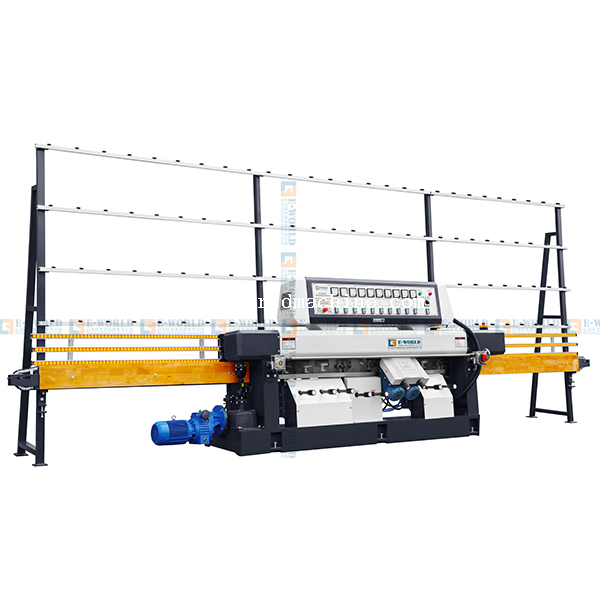
Behind every high-efficiency, zero-defect production floor stands the precise machinery required to execute flawless fabrication and testing. As a premier manufacturer of high-reliability automated glass processing systems, E-world delivers the code-compliant, ruggedly engineered machinery and cutting-edge automation solutions needed to support heavy manufacturing pipelines globally. By pairing state-of-the-art technological design with extensive technical support, they help operators maintain absolute joint, surface, and structural integrity across demanding industrial setups.
As a critical next step, finalize your exact material specifications immediately. Document your absolute tolerance limits and expected environmental operating conditions. Request comprehensive Design for Manufacturability (DFM) feedback from your shortlisted vendors. Do this before committing any capital to steel tooling. A thorough DFM review highlights potential structural failures early in the process. It ensures your initial design translates successfully into a manufactured reality.
FAQ
Q: What is the typical lead time for custom container glass molds?
A: The design-to-production timeline usually spans 6 to 12 weeks. This timeframe includes initial CAD modeling, mold machining, and physical sampling. Complex geometrical shapes or unique branding embossing may extend this period. You should completely finalize all aesthetic designs before cutting any steel to avoid costly delays.
Q: Can float glass be used for high-strength applications?
A: Yes, but never in its raw annealed state. High-strength applications strictly require post-process thermal tempering or advanced chemical strengthening. Tempering creates deep compressive surface stress, making it highly resistant to impacts. Untreated float sheets will easily shatter into dangerous shards under moderate mechanical loads.
Q: Why is specialty glass significantly more expensive than container glass?
A: The steep cost difference stems from expensive raw material sourcing and much lower yield rates. Specialty compositions require extremely specialized, high-temperature furnaces. Achieving true micron-level tolerances inherently reduces the acceptable production yield. The massive energy costs and strict quality thresholds drive up the final unit price significantly.
Q: What are the minimum order quantities (MOQs) for custom glass forming?
A: MOQs vary dramatically by the chosen method. Float production requires extremely high volumes due to continuous, uninterrupted furnace operation. Container lines demand moderate-to-high MOQs to financially justify complex mold setup times. Specialty processes have variable MOQs, often allowing smaller technical batches, though at a significantly higher cost per unit.