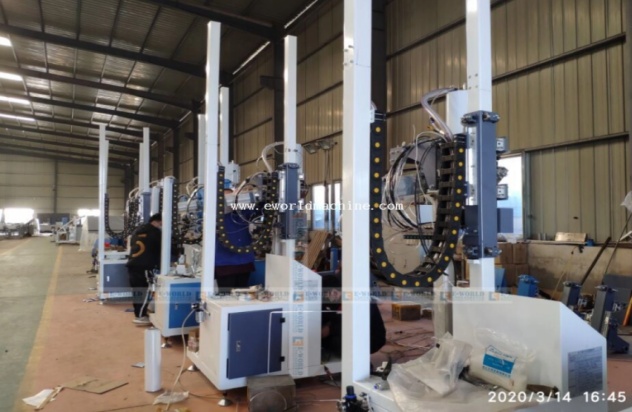
The journey from a raw sheet of flat glass to a finished architectural or industrial panel is far more complex than it appears at first glance. Behind every polished façade panel, insulated window unit, shower enclosure, furniture top, or decorative partition lies a carefully managed sequence of cutting, shaping, edging, drilling, washing, tempering, laminating, or insulating operations. At the center of this transformation is Glass Machinery, which determines not only how efficiently a manufacturer can work, but also how consistently the final product meets modern expectations for precision, appearance, strength, and safety. As demand continues to grow for customized sizes, high-performance glazing, and faster delivery cycles, understanding the role of machinery in glass production has become increasingly important for manufacturers, fabricators, and buyers alike.
Why Glass Panel Manufacturing Depends on Glass Machinery
In modern production environments, manual processing alone is no longer enough to deliver the speed and repeatability required by the market. Glass Machinery makes it possible to process flat glass into finished panels with tight dimensional accuracy, clean edges, reliable hole placement, and stable surface quality. This matters because even a small deviation in one stage can affect installation, sealing, structural performance, or visual appearance later.
For manufacturers, the value of machinery goes beyond automation. The right equipment helps standardize operations, reduce breakage, minimize rework, and improve output consistency across batches. It also supports product diversification. A factory equipped with the right combination of cutting machines, edging lines, washing systems, tempering furnaces, and insulating glass equipment can respond more quickly to orders for architectural glass, appliance glass, solar glass, and interior decorative panels.
In simple terms, the quality of the final glass panel is closely tied to the quality and coordination of the machines used to produce it.
Starting with Flat Glass: The Foundation of the Process
Every finished panel begins with a flat glass sheet, usually supplied in standard jumbo sizes. Before any transformation happens, the manufacturer must assess the sheet based on thickness, coating type, intended application, and downstream processing requirements. Clear float glass, low-E coated glass, tinted glass, reflective glass, and patterned glass may all require slightly different handling conditions.
At this stage, production planning is just as important as material selection. Operators need to determine cutting layouts, optimize material utilization, and identify which sheets will go to tempering, lamination, or insulating assembly. Efficient planning reduces waste and ensures each sheet is routed correctly through the production line.
Cutting and Breakout: The First Critical Transformation
The first major processing stage is cutting. Flat glass sheets must be converted into the required dimensions before they can become finished panels. This is where cutting tables and CNC cutting systems play a central role.
A poorly cut sheet creates problems that multiply later. Edge finishing becomes less efficient, hole positions may shift, and fitting accuracy can be compromised. Advanced Glass Machinery used for cutting helps maintain consistent dimensions, reduce chip formation, and improve repeatability across production runs.
Modern cutting systems are often paired with optimization software that calculates the best nesting layout. This helps manufacturers reduce offcuts and use raw material more efficiently. In large-scale panel production, even small improvements in glass yield can significantly affect profitability.
After scoring, the glass must be broken out and transferred carefully. Automatic loading and breakout systems can reduce labor intensity and lower the risk of scratches or breakage, especially when working with large panels or coated surfaces.
Edge Processing and Hole Drilling: Refining the Panel
Once the glass is cut to size, the next step is often edge processing. This is necessary not only for appearance but also for safety, strength, and preparation for later stages such as tempering or assembly.
Edge grinding and polishing machines remove sharpness, improve uniformity, and help prevent edge-related stress failures. Depending on the product, the edge may be arrised, flat polished, beveled, or processed into a more specialized profile. Shower doors, furniture glass, and decorative panels often demand higher visual edge quality, while architectural units may prioritize structural consistency and compatibility with hardware.
Washing and Inspection Before Further Processing
Cleanliness is essential in glass manufacturing. Dust, cutting oil, edge residue, and fingerprints can affect both appearance and downstream processing results. Before the panel enters tempering, lamination, coating, or insulating assembly, it typically passes through a glass washing machine.
A high-quality washing system does more than clean the surface. It prepares the glass for bonding, coating integrity, and visual inspection. For example, in insulating glass production, poor cleaning can compromise seal performance. In laminated glass manufacturing, contamination can affect interlayer adhesion. In high-end decorative applications, even minor surface marks may be unacceptable.

Main Processing Routes for Finished Glass Panels
Not all glass panels follow the same route after cutting and edging. The next stage depends on the end use of the product. This is where Glass Machinery becomes highly specialized.
Tempered glass panels
Tempering furnaces heat the glass and then cool it rapidly to increase strength. Tempered glass is widely used in doors, partitions, façades, railings, and appliance applications. The quality of the furnace affects flatness, optical performance, stress balance, and breakage rate.
Laminated glass panels
Laminated glass combines two or more sheets with an interlayer, often for safety, sound reduction, or security performance. This process requires accurate glass preparation, clean surfaces, and controlled assembly conditions.
Insulating glass units
Insulating glass consists of two or more glass panes separated by spacers and sealed to create an air or gas-filled unit. It is commonly used in energy-efficient windows and curtain walls. The production line typically includes spacer preparation, washing, assembly, pressing, and sealing.
A Simple Overview of the Main Manufacturing Stages
The table below shows how flat glass typically moves through production and where Glass Machinery supports each stage.
Manufacturing Stage | Main Purpose | Typical Glass Machinery | Result |
Raw glass loading | Transfer and position flat glass safely | Glass loading table, automatic loader | Stable start for processing |
Cutting | Create accurate sizes and shapes | CNC cutting table, breakout table | Cut glass blanks |
Edge processing | Remove sharp edges and refine finish | Edging machine, beveling machine | Safer, cleaner edges |
Drilling/notching | Prepare for fittings and assembly | Glass drilling machine, CNC working center | Functional cutouts and holes |
Washing | Remove dust, oil, and residue | Glass washing machine | Clean surface for next step |
Tempering/laminating/IG | Improve strength or insulation performance | Tempering furnace, laminating line, insulating glass machine | Finished performance glass |
Final inspection and packing | Check quality and prepare for shipment | Inspection station, packing equipment | Delivery-ready glass panels |
This workflow can be simple or highly automated depending on factory size, product range, and order complexity.
Automation Is Changing How Glass Panels Are Made
As the glass industry evolves, automation is becoming a stronger competitive factor. Many manufacturers are moving from standalone machines to connected production lines where loading, cutting, transfer, edging, washing, and assembly are integrated into a more continuous workflow.
The benefit is not just speed. Automation can reduce manual handling, improve traceability, and make quality more consistent across shifts. It also helps factories manage larger panel sizes and more customized orders without causing major disruptions.
Final Thoughts on Turning Flat Glass into Finished Panels
From cutting and edging to washing, tempering, laminating, and insulating, the path from flat glass to a finished panel depends on precision at every stage. Reliable Glass Machinery makes that precision repeatable. It helps manufacturers control quality, improve efficiency, reduce waste, and respond more effectively to changing customer expectations. More importantly, it gives producers the technical foundation needed to move beyond basic fabrication and toward higher-value glass products that serve architecture, interiors, appliances, and industrial applications.
From our perspective, successful glass manufacturing is not simply about owning more machines, but about choosing the right machines for the right workflow. At Shandong Eworld Machine Co.,Ltd, we understand that manufacturers need practical, dependable equipment that fits real production demands rather than idealized showroom conditions. Whether a factory is upgrading a single processing stage or planning a broader glass panel production line, many customers prefer to learn more from Shandong Eworld Machine Co.,Ltd when comparing equipment options and building a more efficient processing setup for the future.
FAQ
1. What role does Glass Machinery play in glass panel production?
Glass Machinery supports each main production stage, including loading, cutting, edging, drilling, washing, tempering, laminating, and insulating assembly. It helps improve accuracy, efficiency, and final product quality.
2. Why is edge processing important before tempering or assembly?
Edge processing removes defects and sharpness while improving panel consistency. Proper edge quality reduces the risk of breakage and helps prepare the glass for later operations such as tempering, laminating, or hardware installation.
3. What types of finished glass panels can be produced from flat glass?
Flat glass can be processed into tempered glass, laminated glass, insulating glass units, furniture glass, shower glass, decorative panels, and various custom architectural or industrial products.
4. How should a manufacturer choose suitable glass processing equipment?
The best choice depends on product type, required accuracy, production volume, available space, automation goals, and future expansion plans. A suitable machinery setup should match both present needs and long-term business strategy.